
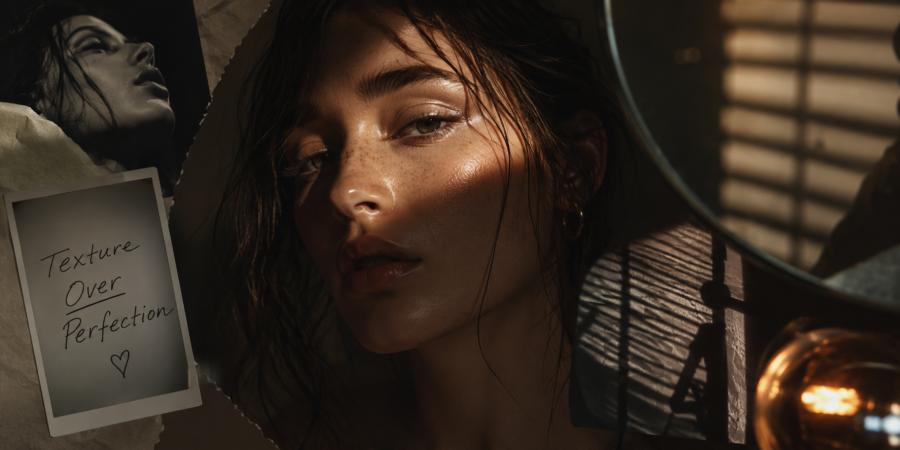
A photograph can be technically flawless and still feel emotionally vacant. Sharp focus, immaculate retouching, and balanced lighting are useful tools, but they are not personality substitutes. Human faces carry history in tiny details: pores, faint lines, freckles, and subtle shifts in tone. When lighting erases all of that, the result often resembles a luxury mannequin that somehow learned to blink.
When Skin Stops Looking Like Plastic Wrap
Texture is not a problem waiting for software. It is visual information.Beauty photography built around texture allows viewers to sense presence rather than perfection. Skin reflects light in complex ways. Soft highlights slide across cheekbones, shadows gather beneath lips, and tiny surface variations create depth. Removing every mark may look “clean,” but it can also drain the face of rhythm, warmth, and credibility.
Side lighting is one of the simplest ways to bring this back. Place a softbox or window slightly off to one side instead of directly in front of the subject. The angle lets light skim across the skin, revealing structure without becoming cruel. Too harsh, and every pore files a formal complaint. Too flat, and the face starts looking like it was faxed.
Let Shadows Have Their Say
Shadows are not failed highlights. They shape mood, hide what does not need explaining, and give the viewer somewhere to linger. In beauty work, a controlled shadow can make an image feel intimate, mysterious, or quietly dramatic.Instead of filling every dark area, try subtracting light. Use black foam board, flags, or even a dark jacket held just out of frame to deepen one side of the face. This negative fill can carve cheekbones, sharpen the jawline, and create emotional tension without requiring the subject to stare into the distance like they just remembered an unpaid parking ticket.
The goal is not gloom. It is dimension. A face with no shadow can feel overexplained. A face with considered shadow invites interpretation.
Highlights That Behave Badly On Purpose
Highlights do not always need to be polite. A glossy streak across the eyelid, a bright edge on the nose, or a flare from metallic makeup can make a beauty image feel alive. Controlled imperfection often carries more energy than obedient lighting.Experiment with reflectors, mirrors, phone screens, foil, or small LED panels placed at unusual angles. Let highlights break the rules a little. The trick is intention. Random glare looks accidental; deliberate glare looks editorial. There is a difference between “fashion campaign” and “camera met a bathroom mirror and panicked.”
Unusual Light Makes Honest Portraits
Beauty lighting does not need to come packaged in expensive modifiers and studio mythology. Some of the most engaging setups begin with curiosity rather than equipment catalogs.Window blinds can stripe light across the face with cinematic tension. A projector can wash skin with shape and atmosphere. Streetlights, refrigerator glow, candles, or a single lamp bounced off a wall can produce beauty portraits with mood that polished studio symmetry sometimes struggles to reach.
Unconventional lighting works because it introduces unpredictability. Perfectly centered beauty lighting often communicates polish, but less traditional sources create emotional texture. They suggest place, time, and atmosphere. The portrait starts feeling lived in rather than manufactured.
This does not mean abandoning technique. Exposure still matters. Color balance still matters. Light should serve intention, not chaos dressed up as artistic bravery. There is a meaningful difference between experimentation and accidentally photographing someone like they are being interrogated about missing cheesecake.
Mood Lives Between Bright and Dark
Serious beauty photography depends on restraint as much as creativity.Every lighting choice communicates something. High-key light with minimal shadow suggests openness and softness. Directional light with deeper contrast introduces tension and gravity. Neither approach is inherently superior. What matters is alignment between light and emotional tone.
A portrait intended to feel vulnerable may benefit from gentle falloff and softened contrast. A more assertive image might lean into stronger shadows and sharper transitions. When photographers chase a universal lighting formula, they risk flattening emotional possibility.
Faces are not identical architecture. One subject may come alive with dramatic side light while another feels strongest under diffused illumination. Paying attention to bone structure, expression, and mood often matters more than copying diagrams from tutorials.
Bright Ideas and Soft Shadows
Perfection is strangely forgettable. Human presence is not.Beauty photography becomes more compelling when photographers stop treating texture as rebellion and start seeing it as collaboration. Skin texture, imperfect highlights, and intentional shadows do not weaken beauty. They ground it.
The camera records surfaces, but light reveals character. That revelation rarely arrives through clinical sameness. It appears in the gentle shadow beneath an eye, the uneven reflection across glossy makeup, or the confidence to leave certain details untouched.
Memorable beauty portraits are not always the cleanest images in the gallery. They are often the ones that hesitate slightly, breathe visibly, and carry enough personality to resist looking interchangeable. Light does more than flatter a face. Used thoughtfully, it gives that face a pulse.
Article kindly provided by videographymanchester.co.uk