
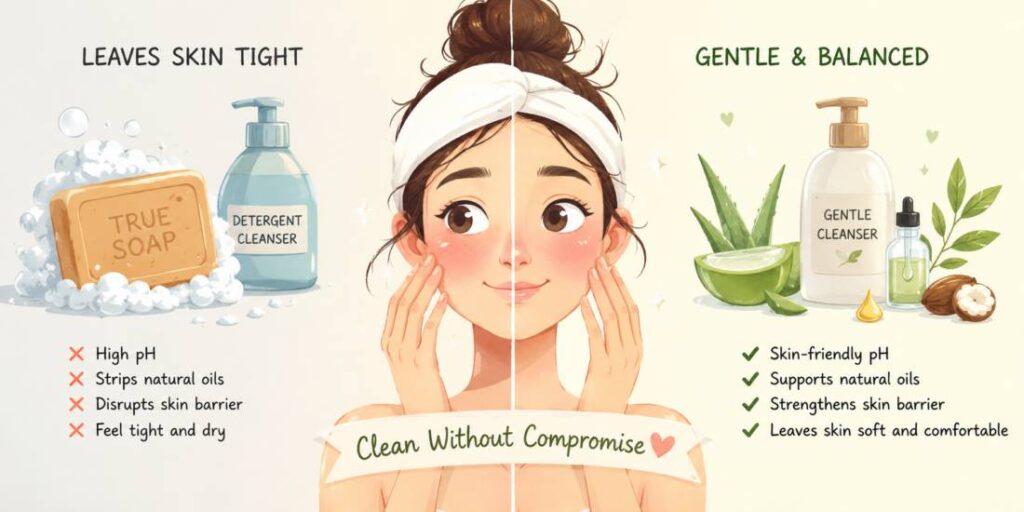
That tight feeling is usually not proof that a soap has done an excellent job. It may mean the cleanser has removed too much of the skin’s natural oil, disturbed its moisture balance, or left the outer layer slightly stressed. Skin is not just a decorative wrapping for the human soup inside us. It is a protective barrier, and it works best when it is treated with some basic respect.
Soap Is Not Always Just Soap
Traditional soap is made through a chemical reaction between fats or oils and an alkaline ingredient. This process creates true soap, which is excellent at lifting away grime, sweat, and oil. It has been doing that job for centuries, long before bathrooms had mood lighting and suspiciously expensive hand towels.The catch is that true soap tends to be alkaline, while healthy skin is naturally slightly acidic. This matters because the skin’s surface has what is often called the acid mantle, a thin protective layer that helps defend against dryness, irritation, and unwanted microbes. When a cleanser is too alkaline, it can temporarily disrupt that surface environment.
Detergent-based cleansers, sometimes called syndet bars or cleansing bars, are different. They are made with synthetic surfactants rather than traditional soap molecules. That sounds less charming than “handmade soap,” but it is not automatically bad. In fact, many gentle facial cleansers and sensitive-skin body washes use detergent-based formulas because their pH can be adjusted to sit closer to the skin’s natural range.
Why Tight Skin Happens
Tightness after washing often comes from a damaged or temporarily weakened skin barrier. When a cleanser strips away too much oil, water escapes more easily from the skin. The surface then feels stretched, dry, or squeaky. “Squeaky clean” may sound appealing for dinner plates, but faces are not dinner plates, despite what a toddler with jam-covered hands may believe.Some ingredients make this more likely. Strong cleansing agents, high-pH formulas, heavy fragrance, and overuse of exfoliating acids can all contribute to dryness or irritation. Hot water can make things worse by dissolving natural oils more aggressively. Your skin may enjoy warmth, but it does not need to be treated like a stubborn saucepan.
Ingredients That Help Protect the Skin Barrier
Fortunately, many modern cleansers are designed to clean without leaving skin feeling as though it has spent the afternoon crossing a desert.Certain ingredients help support moisture retention and reduce the likelihood of post-wash tightness. Humectants attract water to the skin, while emollients help soften and smooth the surface.
- Glycerin helps draw moisture into the outer layers of the skin.
- Aloe vera can provide soothing properties for sensitive skin.
- Shea butter helps replenish softness and reduce dryness.
- Ceramides support the skin barrier and help prevent moisture loss.
- Oat-based ingredients may help calm irritation and discomfort.
Why Sensitive Skin Reacts More Strongly
People with dry or sensitive skin often notice cleanser-related problems first. Their skin barrier may already be compromised, making it easier for irritants to cause redness, itching, or discomfort.Conditions such as eczema and rosacea can further increase sensitivity. For these individuals, choosing a cleanser becomes less about chasing the most dramatic cleaning effect and more about maintaining balance. The goal is to remove what should be removed while leaving behind what the skin actually needs.
This is one reason dermatologists frequently recommend mild cleansers that are free from harsh detergents and excessive fragrance. A product that creates mountains of foam may look impressive, but bubbles are not a reliable measure of cleansing quality. If they were, a bubble bath would qualify as advanced skincare.
What to Look for in a Daily Cleanser
Shopping for a gentle cleanser can feel surprisingly complicated. Shelves are crowded with promises, scientific-sounding terms, and enough packaging claims to fill a small novel.A few practical guidelines can simplify the process:
- Look for products labeled for sensitive or dry skin if tightness is a recurring problem.
- Consider cleansers with moisturizing ingredients such as glycerin or ceramides.
- Avoid heavily fragranced products if your skin reacts easily.
- Use lukewarm rather than very hot water.
- Pay attention to how your skin feels after washing rather than how much foam is produced.
A Clean Getaway From Tight Skin
Healthy skin rarely rewards extremes. It does not need to be scrubbed into submission or stripped until every trace of natural oil disappears. A good cleanser respects the skin barrier while still removing the daily accumulation of sweat, dirt, and excess oil.When skin feels comfortable after washing rather than tight, dry, or irritated, that is often a sign that the cleanser is working with the skin instead of against it. Finding the right product may take some experimentation, but the result is worth it. After all, skin has enough responsibilities already without spending the day recovering from its own bath.
Article kindly provided by botaniesoap.com