
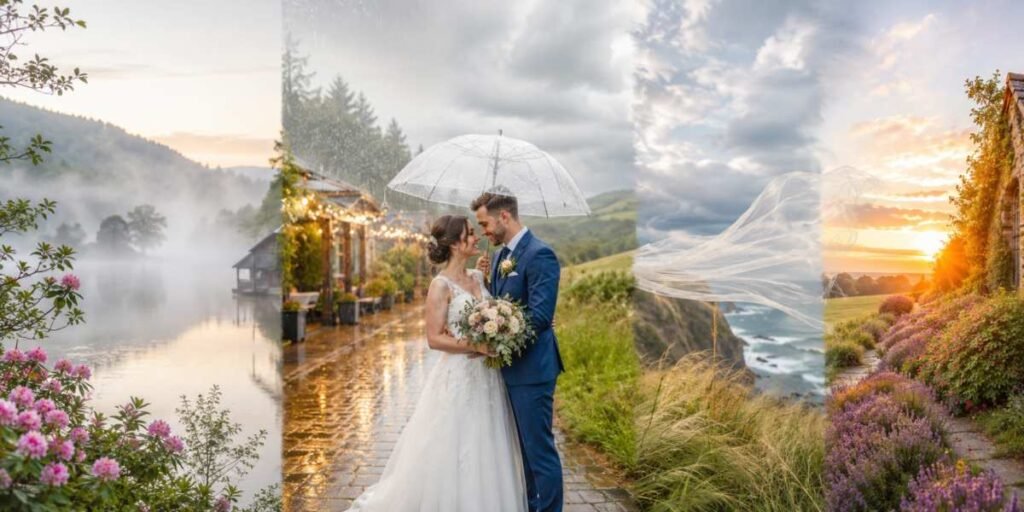
Couples are often encouraged to imagine their wedding day beneath a flawless blue sky, with gentle warmth, spotless shoes and absolutely no need for anyone to wrestle with an umbrella. Real weather rarely reads the planning documents. Fortunately, conditions that appear inconvenient at first can produce photographs with more atmosphere, colour and personality than a cloudless day ever could.
Overcast Skies Create Beautifully Soft Light
Bright midday sunshine may feel cheerful, but it can produce harsh shadows, squinting faces and shiny foreheads that appear to have developed their own weather systems. Overcast skies act like a giant natural diffuser, spreading light evenly across faces and clothing.This softer light is particularly flattering for portraits because it reduces deep shadows beneath the eyes and allows subtle details to remain visible. Lace, embroidery, flowers and carefully chosen fabrics can all be photographed without sections becoming glaringly bright or disappearing into darkness.
Cloud cover also gives photographers greater freedom when choosing locations. Under strong sunshine, people may need to stand in specific patches of shade. On an overcast day, gardens, courtyards and open spaces can often be used without everyone being shuffled around like furniture during a house move.
Rain Adds Reflections Colour and Character
Rain changes the appearance of almost everything it touches. Stone pathways become darker and richer, leaves look greener, and streets begin reflecting lights, buildings and passing umbrellas. These reflections can introduce depth and visual interest, especially during evening photographs.A light shower can also create wonderfully intimate images. A couple standing close beneath an umbrella naturally forms a small private space, even when surrounded by guests. The resulting photographs often feel spontaneous rather than carefully arranged.
Preparation makes a considerable difference. Useful items include:
- A smart umbrella in a neutral or transparent design
- Spare footwear for walking across damp ground
- Towels for drying benches, bouquets or trouser hems
- A sheltered location that still provides attractive natural light
Mist Brings an Air of Quiet Romance
Mist has a remarkable ability to simplify a landscape without making it feel empty. Busy backgrounds become softer, distant buildings gently fade away, and attention naturally falls on the couple rather than everything happening behind them. The result is often a photograph that feels calm, timeless and full of emotion.Morning mist can be especially rewarding at countryside venues, lakes or woodland settings. It adds layers to the scene while allowing dresses, suits and flowers to stand out with surprising clarity. Instead of fighting against the conditions, experienced photographers often embrace them, using the softness to create images that would be impossible on a bright summer afternoon.
There is also something memorable about looking back at photographs years later and immediately remembering the atmosphere of the day. Sunshine is lovely, but mist gives a wedding its own visual identity.
Wind Can Add Movement Rather Than Mayhem
Wind sometimes receives an unfair reputation. Yes, it has a habit of introducing unexpected hairstyles and encouraging veils to develop independent ambitions, but it also creates movement that makes photographs feel alive.A gently flowing veil, a dress caught by a breeze or trees swaying in the background all introduce energy that cannot be recreated by asking everyone to stand perfectly still. Images with movement often feel more natural because they capture genuine moments instead of frozen poses.
Of course, flexibility is important. If the wind decides to behave like it has consumed three espressos before the ceremony, photographers can simply adjust positions, use sheltered areas or shorten outdoor sessions until conditions become more manageable. Adaptation usually wins over stubbornness.
Dramatic Clouds Tell a Bigger Story
Blue skies certainly have their place, but dramatic clouds can transform an ordinary background into something unforgettable. Large cloud formations add texture, depth and contrast without distracting from the people in the frame.Sunlight breaking through darker clouds can create striking highlights that add dimension to portraits. During golden hour, those same clouds often catch rich oranges, pinks and soft purples, producing skies that appear almost painted. Even photographs taken in familiar locations suddenly gain a completely different character.
Weather that changes throughout the day can also provide surprising variety. The album may include soft overcast portraits before the ceremony, rain reflections in the afternoon and colourful skies by the evening, all without travelling anywhere else.
Planning for the Unexpected Pays Off
The most successful wedding days rarely depend on perfect weather. They depend on good preparation and a willingness to work with whatever conditions arrive.Discuss alternative locations with your photographer before the wedding, especially if outdoor portraits are important. Attractive covered walkways, conservatories, porches or elegant indoor spaces can provide excellent backup options without feeling like second-best choices.
Comfort also matters. Warm coats between photographs, spare umbrellas for the wedding party and a few extra minutes built into the schedule can remove unnecessary pressure. When everyone stays relaxed, that confidence naturally appears in the photographs.
Perhaps most importantly, resist checking the weather forecast every fifteen minutes during the final week before the wedding. Forecasts change remarkably often, and no amount of determined staring at an app has ever persuaded a cloud to submit a revised travel itinerary.
Every Cloud Really Has a Silver Lining
Some of the most treasured wedding photographs owe their existence to weather that initially seemed disappointing. Gentle rain encourages closeness, mist creates atmosphere, clouds soften harsh light and wind brings movement that makes images feel wonderfully authentic.Rather than hoping every cloud disappears before the ceremony begins, it is worth remembering that nature often contributes far more than it takes away. Wedding photographs are not simply records of how everything looked; they preserve how the day felt. When couples embrace whatever the skies decide to deliver, they often receive a collection of images that feels richer, more distinctive and impossible to mistake for anyone else’s celebration.
Article kindly provided by emma-janephotography.co.uk