
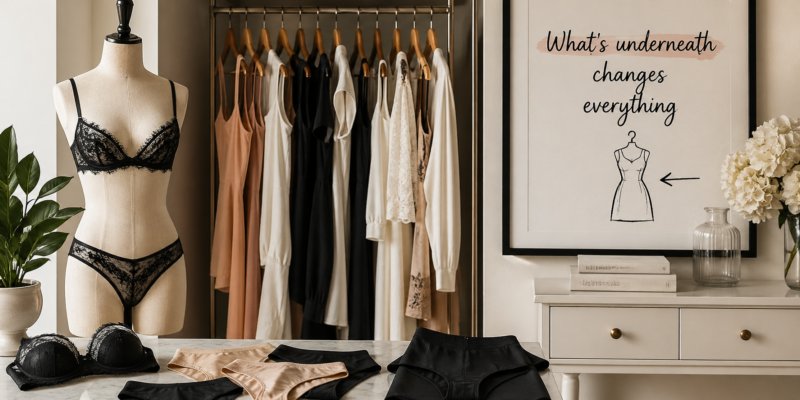
How Bras Rewrite Silhouettes
A bra does more than provide support; it defines proportions. The height, shape, and separation it creates influence how tops and dresses drape across the torso. A balconette bra, for example, lifts in a way that can enhance structured garments, while a full-coverage bra offers smoother lines for everyday wear. The wrong bra can create unexpected bulges, gaps, or lines that show through clothing like an uninvited guest. Thin fabrics are particularly unforgiving—they reveal seams, textures, and even minor fit issues with alarming enthusiasm. Choosing the right bra involves matching it to the outfit’s neckline and fabric weight. Strapless bras work well with open necklines, but only if they fit securely. Otherwise, they tend to spend the day slowly migrating south, which is not their intended purpose.Briefs and the Battle Against Visible Lines
Lower garments play an equally important role. The wrong pair of briefs can interrupt the smooth line of a skirt or trousers, creating visible edges that distract from the overall look. Seamless options and laser-cut edges are often the quiet heroes here. They disappear under clothing, allowing the outer fabric to do its job without interference. On the other hand, heavily stitched or elastic-heavy styles can create lines that appear at the least convenient moments—like under fitted trousers during a meeting where you’d rather not think about your underwear at all. Fabric choice matters too. Breathable materials help maintain comfort, especially in warmer conditions, while stretch fabrics adapt better to movement. No one wants to feel like their clothing is negotiating a ceasefire with their underwear every time they sit down.- Opt for seamless styles under fitted clothing
- Match fabric weight to your outfit
- Check fit while sitting and moving, not just standing
Shapewear as Subtle Engineering
Shapewear often gets framed as dramatic transformation, but its real strength lies in subtle refinement. It smooths transitions between body and fabric, reducing bunching and creating a cleaner silhouette. That said, not all shapewear is created equal. Pieces that are too tight can restrict movement and create new lines instead of eliminating them. Comfort and functionality should always outrank the idea of squeezing into something for the sake of appearance. Used thoughtfully, shapewear can help certain garments sit better—especially structured dresses or tailored pieces. Used poorly, it can turn a simple outfit into an endurance test.Matching Lingerie to Outfit Types
Different outfits demand different foundations. A lightweight summer dress benefits from breathable, minimal layers, while heavier fabrics allow for more structured support underneath.A fitted blazer or tailored trousers often require smoother, more structured underlayers to maintain clean lines. Meanwhile, relaxed outfits allow for more flexibility, but even then, the wrong choice can shift the entire look from effortless to slightly off.
- Pair structured outfits with supportive, shaping undergarments
- Use lighter, breathable pieces for casual or warm-weather looks
- Consider neckline and cut when choosing bra styles
When Comfort and Appearance Align
There’s a persistent myth that looking polished requires a degree of discomfort. In reality, well-chosen lingerie should make clothing feel easier to wear, not harder. If something pinches, shifts, or demands constant adjustment, it’s working against you. Comfort has a direct effect on posture and movement. When undergarments fit properly, there’s less fidgeting and more ease. Clothes hang better on a body that isn’t subtly fighting its own foundation layers. There’s also a psychological element. Knowing everything underneath is doing its job allows you to focus outward rather than inward. That quiet confidence often shows more clearly than any specific outfit detail.Small Adjustments Big Differences
Minor changes can produce surprisingly noticeable results. Swapping one bra style for another, choosing a seamless brief instead of a stitched one, or selecting lighter fabric on a humid day can transform how an outfit behaves. It’s not about perfection. It’s about reducing friction—both literal and visual. Clothes should move with you, not argue with every step, stretch, or sit-down moment. Sometimes the fix is as simple as trying on an outfit with different undergarments and noticing the difference. Other times, it involves reassessing pieces that no longer fit as they once did. Bodies change, fabrics age, and what worked last year might now be staging a quiet rebellion.Underneath It All
What sits beneath an outfit rarely gets attention, yet it quietly determines the final result. The right lingerie doesn’t demand recognition—it just allows everything else to look and feel better. A well-chosen foundation doesn’t transform who you are; it simply removes unnecessary distractions. And when nothing is pinching, slipping, or making surprise appearances through fabric, getting dressed becomes a lot less of a negotiation and a lot more of a straightforward decision.Article kindly provided by plumslingerie.com